Basements can provide some of the most valuable storage space in a Colorado home. They can also become the place where everything without an obvious home ends up.
Holiday decorations, camping equipment, childhood keepsakes, extra furniture, tools, ski gear, moving boxes, and items you’re “going to deal with later” can gradually consume an entire basement. Before long, finding one box means moving six others.
Good basement organization isn’t about squeezing as much as possible downstairs. It’s about deciding what belongs there and creating storage systems that make those belongings accessible and easier to protect.
Colorado homeowners also have another consideration: basement conditions aren’t always the same as those in the main living areas. Moisture, plumbing problems, and temperature changes can affect what and how you store.
Here’s how to create basement storage that works for real life and continues working after the organizing project is finished.
Why Basements Become the Default Dumping Ground
Basements make clutter easy to postpone.
Unlike kitchen counters or bedroom floors, basement clutter is often out of sight. If you don’t know where something belongs, carrying it downstairs can feel like a solution. Moving boxes stay packed because there’s no immediate need to empty them. Furniture gets stored “just in case.” Children’s belongings accumulate long after they’ve outgrown them.
Eventually, the basement becomes storage for decisions that haven’t been made.
A more sustainable approach starts by deciding what the basement is actually supposed to hold. Long-term storage, seasonal equipment, household overflow, recreation gear, and keepsakes can all belong downstairs, but they need defined areas rather than one expanding collection of boxes.
Zone the Space Before You Buy a Single Bin
It’s tempting to begin a basement makeover with a trip to buy matching containers. Hold off.
Storage products work best after you know what you’re storing.
Start by grouping belongings according to purpose. You might create zones for holiday decorations, outdoor recreation, seasonal clothing, household supplies, tools, keepsakes, and children’s items.
The categories should reflect your household rather than someone else’s organizing system.
Once you’ve determined how much space each category requires, you can choose shelving and containers that actually fit. This also prevents spending money on bins only to discover they’re the wrong dimensions or don’t hold what you intended.
Leave room for the system to breathe, too. Shelves packed completely full from day one have nowhere to accommodate changing needs.
What Should Never Be Stored in a Basement
Not everything belongs downstairs simply because there’s available space.
Anything particularly vulnerable to moisture or environmental changes deserves careful consideration. Important documents, irreplaceable photographs, valuable artwork, and delicate family heirlooms may be better stored in a more controlled part of the home.
Avoid putting belongings directly on a basement floor, as water could damage them. Cardboard boxes are particularly vulnerable because they can absorb moisture and deteriorate.
Food storage also deserves thought. Certain products may require specific temperature and humidity conditions, while household chemicals, paints, and other potentially hazardous products should always be stored according to manufacturer instructions and away from children and pets.
The bigger lesson is simple: don’t treat every empty basement corner as appropriate storage. Consider the needs of the item before deciding where it belongs.
Shelving, Bins, and Racking That Survive Moisture and Temperature Swings
Colorado’s dry climate doesn’t mean basements are immune to moisture. Foundation issues, plumbing leaks, snowmelt, appliances, and other sources can still create unexpected water problems.
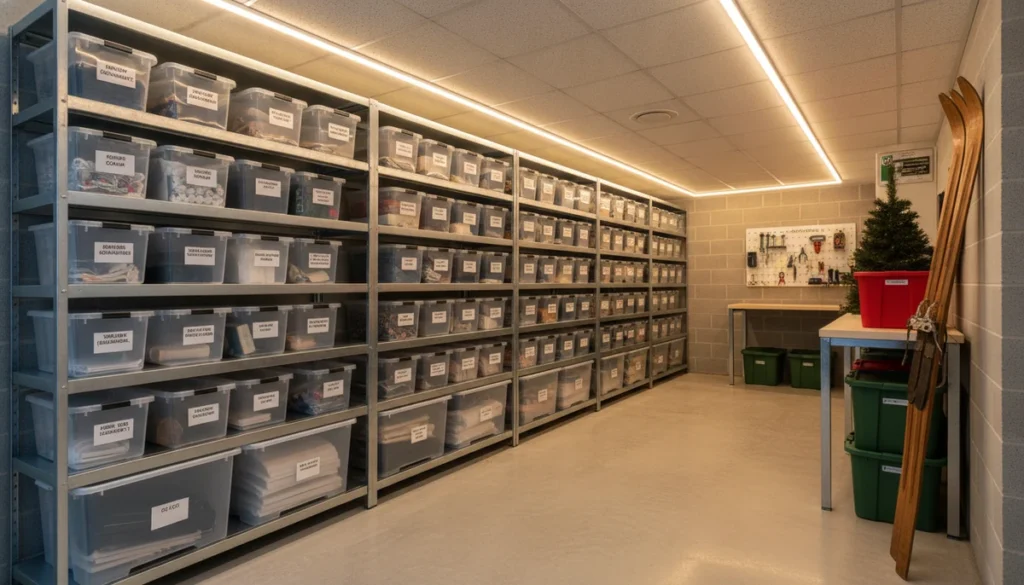
For basement organization, durable shelving that keeps belongings elevated off the floor can offer an important layer of protection while making storage easier to access.
Plastic storage bins are often more practical than cardboard for basement storage. Clear containers allow you to see contents, while consistent container sizes can make shelving more efficient. Secure lids are especially useful for items stored for long periods.
Labels remain important even with transparent bins. Instead of a vague label such as “Christmas,” something like “Christmas – Tree Ornaments” or “Christmas – Outdoor Lights” makes finding the right container much faster.
There’s no need to transfer everything into matching containers, though. Products should improve the system, not become the focus of it.
Finished vs Unfinished Basement Storage Strategies
A finished basement usually needs to balance storage with living space.
If your basement includes a family room, guest bedroom, playroom, or entertainment area, concealed storage can help maintain that balance. Closets, cabinets, furniture with built-in storage, and dedicated storage rooms can keep household overflow from creeping into living areas.
Unfinished basements may provide more flexibility, but that doesn’t mean belongings should simply be stacked wherever they’ll fit.
Sturdy shelving can establish clear boundaries and create aisles so stored items remain accessible. Keeping categories together also prevents the classic basement problem of knowing you own something but having no idea where it is.
Whatever the basement’s finish level, preserve access to utilities, electrical panels, plumbing, and other home systems rather than allowing storage to gradually block them.
Seasonal Rotation: What Comes Up and What Goes Down
Colorado living comes with plenty of seasonal gear.
Winter may mean skis, sleds, snowshoes, boots, and holiday decorations. Warmer weather brings camping equipment, coolers, hiking gear, and outdoor recreation supplies.
Instead of keeping everything equally accessible all year, use your basement to support seasonal rotation.
As winter ends, cold-weather gear can move into designated basement storage while frequently used summer equipment becomes easier to reach. When temperatures begin dropping again, reverse the process.
The same idea works for seasonal clothing and décor.
This doesn’t necessarily mean completely rearranging your basement twice a year. A well-designed system should make rotating belongings relatively simple. Frequently needed items move into more accessible positions while off-season categories move higher or farther back.
Storage Rooms, Crawl Spaces, and Under-Stair Storage
Basements often contain overlooked storage opportunities, but not every awkward space needs to be filled.
Under-stair areas can work well for compact household storage, provided belongings remain accessible. Dedicated storage rooms can accommodate shelving and clearly defined categories without taking over finished living spaces.
Crawl spaces require more caution. Conditions vary considerably, so consider moisture, temperature, access, and the type of belongings involved before using one for storage.
Whatever space you’re working with, accessibility matters.
If retrieving one container requires crawling behind furniture and moving eight other boxes, you’re unlikely to use what’s stored there. The best basement storage systems allow you to retrieve an item without dismantling everything around it.
When to Bring in a Professional Organizer
Basements can be particularly challenging to organize because they often contain years or decades of accumulated belongings.
You may be dealing with moving boxes that were never unpacked, inherited possessions, children’s keepsakes, holiday decorations, outdoor equipment, and items you’ve repeatedly postponed making decisions about.
That’s where professional organizing can make the process much more manageable.
A professional organizer can help sort belongings into clear categories, establish functional zones, determine what storage products are actually needed, and create systems based on how your household uses the basement.
At Clutterless Home Solutions, our approach is supportive and judgment-free. You remain in control of decisions about what stays and what goes while our professional organizing team provides the structure and hands-on help needed to move the project forward.
Whether you’re reclaiming an unfinished storage basement or trying to prevent storage from overtaking a finished living area, the goal isn’t perfection. It’s a basement you can actually use.
Basement Storage FAQs
What is the best way to organize a basement storage room?
Start with categories rather than containers. Determine what you’re storing, group similar belongings together, and create dedicated zones. From there, choose shelving and bins that fit both the available space and the items being stored.
Are plastic bins better than cardboard boxes for basement storage?
Plastic bins are generally more durable for long-term basement storage because cardboard can absorb moisture and deteriorate. Containers with secure lids can be especially useful for seasonal and infrequently accessed belongings.
Should basement storage be kept off the floor?
Keeping stored belongings elevated is a practical precaution, particularly for items that could be damaged if water reaches the basement floor. Shelving also makes categories easier to see and access.
How do I organize a basement with too much stuff?
Before trying to find storage for everything, sort what you have. Identify what you use, what has sentimental value, what belongs somewhere else, and what you’re ready to donate, recycle, or otherwise let go. Reducing unnecessary belongings can make designing the actual storage system much easier.
Can professional organizers help with basement storage?
Yes. Professional organizers can help sort and categorize belongings, declutter the space, develop storage zones, recommend appropriate organizing products, and establish systems that are easier to maintain.
Does Clutterless Home Solutions organize basements in Colorado?
Yes. Clutterless Home Solutions helps clients throughout Denver, Fort Collins, Colorado Springs, and surrounding Colorado communities organize basements, storage rooms, garages, closets, and other areas of the home.
If your basement has become the place where everything goes but nothing can be found, we can help you create a system designed for real life. Contact us today to learn more.